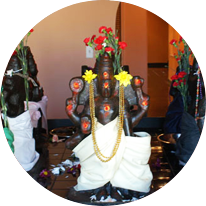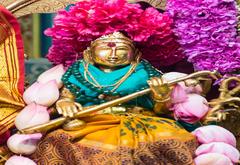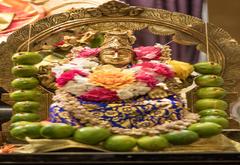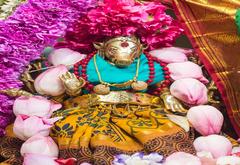
Nature & Purpose Yajur Upakrama Rg Upkrama
Listen to Upakarma MantraUpakarma (Avani Avittam): Nature and Purpose
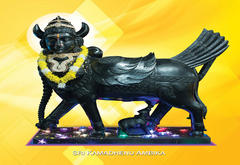
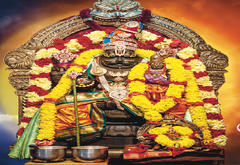
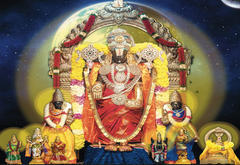
Upakarma (/upaakarma/) means beginning or "Arambham", i.e. to begin the study of the Veda (Veda Adhyayanam). For example, Yajur Upakarma means to begin the study of the Yajur Veda. Those belonging to the Yajur Veda observe the Upakarma in the month of Sravana (August-September), on the day of the full moon (paurnami). Why begin study of the Vedas on this particular day? This auspicious day also happens to be the day when Lord Narayana took the avatara as Lord Hayagriva. Lord Hayagriva as we all know restored the Vedas to Brahma and also is the God of Knowledge.
The next question is: why do this every year? In the not too distant a past, Veda Adhyayanam was performed only during the period Avani to Tai (from mid-August to mid-January). Therefore, one is supposed to perform an "utsarjanam" in the month of Tai, i.e., a giving up of the learning of Vedas from Tai to Avani. Just like a Upakarma function there was a Utsarjana function in Tai. The period between January to August was then devoted to learning other branches of our shastras. Thus the cycle of Upakarma and Utsarjana with regard to Vedic studies was established. However, this method took 12 or more years to learn just one veda. Slowly this became impractical and Vedic studies continued throughout the year.
Therefore, the first thing to do before the Upakarma function is to do a praayaschitta (atonement) for having learned Vedas during the prohibited period. Specifically, one atones for not having performed the Utsarjanam in the month of Tai. That's why we begin the function by doing the "kAmo'karshIt..." japam. The purpose is declared as "adhyAya-utsarjana-akarana-prAyaScittArtham.." (to atone for not doing the utsarjana of Vedic study) and the sankalpam continues as "...ashTottara-sahasra-sankhyayA kAmo'karshIt manyur akArshIt mahA-mantra-japam karishye" (I will now do recite the great "kAmo'kArshIt" mantra 1008 times). The meaning in Tamil is "kAmaththAl seyya pattadhu, kOpaththAl seyya pattadhu" -- done out of desire, done out of anger. The correct way of chanting this mantra is "kAmo'karshIt manyur akArshIt". Don't add namo nama: etc. The right time to perform is immediately after your morning anushthanam like sandhya, samidaadaanam (if you are a brahmachari), brahma-yajnam etc. This is performed during the abhigamana kaalam. Brahmacharis are supposed to have a hair-cut (prefarably by a man!) after this.
The Kanda Rishis and their Significance
We saw that the "kAmo'karshIt manyur akArshIt" japam is done with a sense of contrition. Who else but Vasudeva can bear the burden of our acts of omissions and commissions with regard to shastras? SAstramayena sthira pradIpena -- Daya Devi (compassion of the Lord personified) lights the lamp of shastras so that the jiva can find its way to its home in the Absolute.
After the kamo'karsheeth japam, we proceed to perform the Upakarma function. It is done after mAdhyAhnikam and bhagavad-ArAdhanam (ijyA). The main purpose of the Upakarma function is to offer prayers and express our gratitude to those rishis who gave us the Vedas -- the rishis through whom the Vedic mantras were revealed. These rishis are known as "kaanda rishis". There are different rishis for the different Vedas. We are expected to worship those rishis who belong to our shakha or branch of the Veda, one of Yajur, Rk, Samam etc. The Yajur Veda consists of 4 kaandams. These are known as
- prAjApatya kaaNDam
- saumya kaaNDam
- Agneya kaaNDam and
- vaishvadeva kaaNDam.
These kaandams are named after those rishis who first taught the Vedas, viz., Prajapati, Soma, Agni and Vishvadeva. Subsequently we also offer our prayers to the Upanishads saamhiti, yaajniki, and vaaruni, and finally to Svayambhu and Sadasaspati, through whom the Yajur Veda came down to us.
The sankalpam is mainly taken for performing the Upakarma Homam. Then we say tad angam snAnam karishye, tad angam yajnopavIta-dhAraNam karishye, tad angam kANDarshi tarpaNam karishye -- which implies that all other activities like snaanam, yajnopaveeta dhaaranam, tarpanam etc., are only performed as an 'angam' or subsidiary to the Upakarma Homam (which is the angi or primary).
In the Upakarma Homam as well as in the tarpanam, the offerings are made to the kaanda rishis. In fact this tarpanam is so important that it is included as part of our nitya karma-anushthaanam, our daily worship. There are other minor points that are worth noting:
- Brahmacharis should wear maunji (belt made of sacred grass), ajinam (deerskin) and dandam (stick made of palaasa wood) after they wear the poonool (sacred thread). There are separate mantras for each.
- It is said that: purAtanAn parityajya which implies that you should wear a new set of clothes (veshti and uttarIyam) before the tarpanam and homam.
- It is also said that: kAndarshi tarpaNa-kAle punaH snAtvA Ardra vastra eva tat kuryAt, i.e, before performing the kaanda rishi tarpanam you should once again take a dip in the water and do it with wet clothes.
- The rishi tarpanam is done with the poonool in the nivita position (like a garland) and the water along with rice and sesame seeds should leave the root of the small finger.
- In some traditions you fast on the Upakarma day or at least fast till the end.
- In some traditions a general pitr tarpanam is also done.
Yajur Upakrama
(1) Do morning nityakarmas including sandhyAvandanam as one would do on any other day. (2) kAmo'kArshIt manyur akArshIt japam (first time upAkarmins [talai AvaNi aviTTam] skip this) (a) Acamanam twice (b) prANAyAma (c) sankalpam, including sAttvika tyAgam: taishyAm paurNamAsyAm adhyAya-utsarjana-akaraNa-prAyaScitta-artham, ashTottara-sahasra (1008) [ashTottara-Sata (108)] sankhyayA "kAmo'kArshIt manyur akArshIt" mahAmantra-japam karishye. (e) Do japam of "kAmo'kArshIt manyur akArshIt" 1008 or 108 times as one has resolved. (f) Acamanam once, followed by sAttvika tyAgam (3) Perform mAdhyAhnikam, including mAdhyAhnika snAnam if one is accustomed, followed by bhagavad-ArAdhanam. After this, strictly speaking, one should wait until the afternoon (aparAhna) to perform the upAkarma, but these days, due to exigencies of work, etc., people do it earlier. (4) Preparing for the upAkarma Seated facing east, wearing a pavitram if available, after Acamanam twice, prANAyama, and sankalpa, including sAttvika tyAgam: SrAvaNyAm paurNamAsyAm adhyAya-upAkarma karishye, tad angam kAndarshi-tarpaNam karishye, tad angam yajnopavIta-dhAraNam karishye, tad angam snAnam karishye. [ Brahmacharis add: tad angatayA maunji-ajina-daNDa-dhAraNAni karishye ] (a) First, do the 'nimitta snAnam'. The very orthodox, performing this ritual at a river bank or pushkariNi, would have done the snAnam immediately upon reaching the water. If this is not possible, do mAnasika snAnam as a bare minimum. (b) Wear the new yajnopavItam (poonool-s) with appropriate mantras (c) Brahmacharis should recite mantras for the darbha belt (maunji), krishNAjina (a piece of deer skin), and palAsa daNDa and if possible wear them (d) Acamanam (5) Nava kANDa Rshi tarpaNam (a) Acamanam twice (b) Facing north, walk knee-deep into a river or pool of fresh water if possible. Otherwise stand where you are; traditionally, your clothes should be wet. Do as you can. (c) For each of the following, offer a mixture of (uncooked) rice, black sesame seeds (eL), and water, as you say 'tarpayAmi'. Each line should be said three times. Preferably, someone should help by pouring the water as you release the rice and sesame, as this makes it easier. Wear the yajnopavItam as a necklace (nivItam). For the first seven, cup both your hands together, having the yajnopavItam's brahma-mudi (knots) resting in your palms and with the threads going between your thumb and forefinger of each hand. The water should be released along with the sesame and rice between the two hands, at the base of the little finger. This is known as Rshi tIrtham. (i) prajApatim kANDarshim tarpayAmi (ii) sOmam kANDarshim tarpayAmi (iii) agnim kANDarshim tarpayAmi (iv) viSvAn devAn kANDarshim tarpayAmi (v) sAmhitIr devatA upanishadas tarpayAmi (vi) yajnikIr devatA upanishadas tarpayAmi (vii) vAruNIr devatA upanishadas tarpayAmi Now, still nivItam, the water mixture should be released towards you, off of the base of the hands near the palms (i.e., away from the fingertips). Typically this is done by pointing the fingers straight up, keeping the sides of the hands together. This is known as brahma-tIrtham. (viii) brahmANaGM svayambhuvam tarpayAmi Now the water should be poured as deva-tIrtham. This means that the water mixture should be poured off the tips of the fingers. (ix) sadasaspatim tarpayAmi (x) See Note (f) below (e) Return to upavItam, i.e., your poonool in its normal position. Finish with Acamanam and sAttvika tyAgam, and change into dry clothes. (6) Traditionally there is now a upAkarma homa, where the rishis and devatAs mentioned above are once again saluted using the sacred fire. The there is vedArambha, where the first four anuvAkas of the yajur veda samhita are taught to the sishyas. This is followed by jayAdi homam. These may not be available if one is away from one's elders and acharyas. At minimum, it is recommended that you recite one anuvAka from your veda on this day. The Purusha Sukta suffices, for example. If you haven't learnt any of your veda, you should do gAyatrI japam in its place. [ It is often erroneously thought that upAkarma or AvaNi aviTTam is primarily the changing the yajnopavItam (poonool). This cannot be further from the truth. Changing the poonool happens very often, whenever a significant vedic karma is performed. UpAkarma, however, is a rededication of oneself to the study of one's Veda, along with a salutations to the rishis who perceived and revealed the Vedic mantras to the world. This is the significance of the nava-kANDarshi tarpaNam and the anuvAka recitation. ]
(a) On the UpAkarma day, strictly speaking, the rule is to eat
only after
bhagavad-ArAdhana and the homam. If done
properly this lasts well into
the afternoon. Because of the length of the
procedure, young brahmacharis
and those others who are absolutely unable to
bear their hunger are permitted
to eat before the homam itself. The typical
meal consists of idli and
appam, but excludes rice. Complete
fasting is observed after this
through the night, in preparation for the next
day's gAyatrI japam.
(b) The mantra for the kAmo'kArshIt japam is "kAmo'kArshIt
manyur akArshIt".
Most authorities end with this, and do not
follow it by anything else.
However, in some traditions, the mantra is
"kAmo'kArshIt manyur akArshIt namo namaH".
(c) Some people also change their yajnopavItam before the
kAmo'kArshIt
japam, in addition to the changing done for
upAkarma itself. It should
be remembered that the changing before
upAkarma is the more important
one, and if one only wants to change once, the
upAkarma changing is
preferred.
The reason for this is as follows. the
kAmo'kArshIt japam is done as an
atonement, a prAyaScittam for *not* having
done the traditional utsarjana
sankalpa earlier in the year. The
sankalpa for the japam says this explicitly
('adhyAya-utsarjana-akaraNa'). Just as
upAkarma is the formal
recommencement of Vedic studies, the utsarjana
is a sankalpa done to
formally halt study of the Vedas and commence
study of grammar, prosody,
pronounciation, astronomy, etymology, etc., as
well as other shastras,
all of which are helpful in understanding
the Vedas. The year was
therefore divided into two, one half for
studying the Vedas, the other
half for studying the VedAngas or Vedic
accessories.
The utsarjana has unfortunately fallen into
disuse for quite a while,
so what remains is the meagre prAyaScittam for
not having done it.
Therefore, the important yajnopavItam
changing is for the upAkarma.
(d) sankalpa details
The following is said for any major sankalpa
(mahA-sankalpa). The
underlined parts change depending on the day
and are specified below
for upAkarma this year (2001).
After acharya vandanam and vishvaksena
dhyAnam,
hari om tat SrI govinda govinda govinda!
asya SrI-bhagavato mahApurushasya
vishNor AjnayA
pravartamAnasya
adya brahmaNe dvitIyaparArdhe
SrI-Sveta-varAha-kalpe
vaivasvata-manvantare
kaliyuge prathamapAde
jambudvIpe,
bhAratavarshe, bharatakhaNDe,
SakAbde, meror
dakshiNe pArSve
asmin vartamAnAnAm vyAvahArikANAm
prabhavAdi shashTi
samvatsarANAm madhye
vikrama
nAma samvatsare
dakshiNAyane,
varsha Rtau, SrAvaNa mAse, Sukla
pakshe,
paurNamAsyAm
Subha-tithau,
(if in the USA):
soma-vAsara-sravaNa-nakshatra
yuktAyAm,
(if in Madras or Singapore):
bhauma-vAsara-sravishTa-nakshatra
yuktAyAm,
SrI-vishnu-yoga SrI-vishnu-karaNa Subha-yoga
Subha-karaNa
evam guNa-viSeshaNa viSishTAyAm,
asyAm Subha-tithau,
SrI-bhagavad-AjnayA
[ SrIman-nArAyaNa-prItyartham OR
bhagavat-kainkarya-rUpam OR
bhagavat-prItyartham, depending on
sampradAya ]
followed by the sankalpa for the particular
karma.
Having said a mahA-sankalpa once for a
particular ritual, it need not be
said again and again in its entireity.
It is enough to say "pUrvoccarita
evam guNa-viSeshaNa viSishTAyAm, asyAm
Subha-tithau, SrI-bhagavad-AjnayA..."
(e) sAttvika tyAgam details
sAttvika tyAgam is a moment of contemplation
whereby one dedicates
the act and all its fruits entirely to
Bhagavan, and where one recognizes
that Bhagavan himself is performing the act
through you entirely for His own
purposes. Typically, as an expression of
this attitude, a brief sentence
is stated before and after performing the
karma. In an abbreviated form,
here is one version:
Before doing the karma:
bhagavAn eva
svaniyAmya sva-Sesha-bhUtena mayA
svasmai
svaprItaye svayam eva [name of the act] kArayati.
After doing the karma, say the same thing,
except replace the
last word "kArayati" with
"kAritavAn".
(f) After the kANDa-rishi tarpaNam, some
people add:
Rg-vedam tarpayAmi
yajur-vedam tarpayAmi
sAma-vedam tarpayAmi
atharvaNa-vedam tarpayAmi
itihAsam tarpayAmi
purANam tarpayAmi
kalpam tarpayAmi
Some also now recommend pitR tarpaNam
(prAcIna-vItam) for
those whose fathers are no longer alive.
(g) procedure for wearing the
yajnopavitam (poonool)
(1) Sit squatting (kukkuTTAsanam) facing east.
Acamanam twice
(2) prANAyAmam, wearing pavitram if available
(3) sankalpam, with sAttvika tyAgam:
Srauta-smArta-vihita-nitya-karma-anushThAna-
yogyatA-siddhyartham
yajnopavIta-dhAraNam karishye
(4) Put one yajnopavItam on at a time. To do
this,
hold the yajnopavItam
with both hands, with your right
palm facing up over
your head, and your left palm facing
the ground. The top of
the brahma-mudi (knot) should be
on your right palm and
should be facing right. Then say
this mantra, while
holding the sacred thread this way:
yajnopavIta-dhAraNa-mantrasya
brahmA Rshi:
trishTup chanda:
trayIvidyA devatA
yajnopavIta dhAraNe
viniyoga:
yajnopavItam paramam
pavitram, prajApater yat sahajam purastAt |
Ayushyam ugryam
pratimunca Subhram yajnopavItam balam astu teja: ||
Now wear the
yajnopavItam. Acamanam once.
If you are married,
repeat this procedure for the second yajnopavItam,
from the praNAyAmam
and sankalpa to the mantra, and wear the thread.
Acamanam.
Then, after saying
upavItam chinnantu
jIrNam kaSmala-dUshitam |
visRjAmi punar brahman
varco dIrghAyur astu me ||
remove the old
yajnopavItams and discard them under a tree or some
other natural place.
Don't throw them in the garbage!
Acamanam again
followed by sAttvika tyAgam.
(h) mantras for wearing the maunji, ajina,
and palAsa daNDa:
(1) maunji
,
,
,
,,
iyam duruktAt
paribAdhamAnA Sarma varUtham punatIna AgAt |
-
-
-
-
- -
,
,
,
,
prANApAnAbhyAm
balamAbharantI priyA dEvAnAGM subhagA mEkhaleyam ||
- -
- -
-
-
- -
- -
,
,
, ,
Rtasya gOptrI tapasa:
parasvIghnatI raksha: sahamAnA arAtI: |
-
-
-
-
- -
,
,
,
,
,
sAna: samantamanu
parIhi bhadhrayA bhartAraste mekhale mA rishAma ||
-
-
-
-
-
(2) ajina
,
,
,
, ,
mitrasya cakshur
dharuNam balIyas tejo yaSasvi sthaviraGM samiddham |
- -
-
-
-
- -
-
,
,
anAhanasyam vasanam
jarishNu parIdham vAjyajinam dadhe'ham ||
-- -
-
-
-
-
-
(3) daNDa
,
,
, ,
suSravassuSravasam mA
kuru yathA tvaGM suSrava: susravA asyevamahaGM
-
-
-
-
-
- -
-
,
,
,
,
,, ,,
suSravassuSravA
bhUyAsam yathA tvaGM suSravassuSravo devAnAm nidhigOpO-
-
-
-
-
-
-
- -
,,
,
,
'syevamaham
brAhmaNAnAm brahmaNo nidhigOpO bhUyAsam ||
-
-
-
-
Rg Upakrama
(1) Do morning nityakarmas including
sandhyAvandanam as one
would do on any
other day.
(2) kAmo'kArshIt manyur akArshIt japam
(first time
upAkarmins skip this)
(I am including
this because I think this part is the same as for
yajur
veda. Please fix or skip if I am mistaken.)
(a) Acamanam
twice
(b) prANAyAma
(c)
mahA-sankalpam, including sAttvika tyAgam:
adhyAya-utsarjana-akaraNa-prAyaScitta-artham,
ashTottara-sahasra (1008) [ashTottara-Sata (108)] sankhyayA
"kAmo'kArshIt
manyur akArshIt" mahAmantra-japam karishye.
(e) Do japam of
"kAmo'kArshIt manyur akArshIt" 1008 or 108 times
as one has resolved.
(f) Acamanam
once, followed by sAttvika tyAgam
(3) Perform mAdhyAhnikam, including
mAdhyAhnika snAnam if one is
accustomed.
(4) Preparing for the upAkarma
Seated facing
east, wearing a pavitram if available,
after Acamanam
twice, prANAyama, and mahA-sankalpa, including
sAttvika tyAgam:
SrAvaNyAm
SravaNa-nakshatre
adhItAnAm
chandasAm ayAta-yAmatvAya
vIryavattA-siddhyartham adhyAya-upAkarma karishye,
tad angam
tarpaNAdi karishye,
tad angam snAnam
karishye.
(a) Bathe once
again (at least mAnasika snAnam:
apavitra: pavitro vA sarvAvasthAm gato'pi vA |
ya: smaret puNDarIkAksham sa bAhyAbhyantara-suci: ||
Think of Lord as the lotus-eyes Pundarikaksha and
sprinkle a little water (prokshaNa) on the place
where you will sit/squat. )
(5) maNDala-deva-tarpaNam, etc.
(a) Acamanam
twice
(b) sankalpa
specifically for the tarpaNam:
SrAvaNyAm SravaNa-nakshatre adhItAnAm vIryatA-siddhyartham
svAdhyAya-Atmaka-deva-rshi-pitR-prItyartham sAvitryAdi-
nava-pradhAna-devatAnAm agnyAdi-vimSati-maNDala-devatAnAm
brahma-yajna-devatAnAm ca tarpaNam karishye
(c) tarpaNam
done upavItI (yajnopavItam in standard position)
(I can't give you any more details about how it
is to be done. Probably this should be deva-tIrtham)
sAvitrIm tarpayAmi
brahmANam ''
SraddhAm ''
medhAm ''
prajnAm ''
dhAraNAm ''
sadasaspatim ''
anumatim ''
chandobhya Rshibhya: ''
agnim ''
aptRNasUryam ''
agnim ''
Sukantam ''
agnim ''
Apa: tRpyantu
agnim tarpayAmi
maruta: tRpyantu
agnim tarpayAmi
varmANam tarpayAmi
agnim tarpayAmi
mitrAvaruNau tRpyetAm
agnim tarpayAmi
indrAsomau tRpyetAm
indram tarpayAmi
agnimarutau tRpyetAm
pavamAnasomau tRpyetAm
somam tarpayAmi
agnim tarpayAmi
samjnAnam tarpayAmi
viSvadevA: tRpyantu
devatA: tRpyantu
agnis tRpyatu
vishNus tRpyatu
prajApatis tRpyatu
brahmA tRpyatu
vedA: tRpyantu
devA: tRpyantu
Rshaya: tRpyantu
sarvANi chandAmsi tRpyantu
omkAra: tRpyatu
vashaTkAra: tRpyatu
vyAhRtaya: tRpyantu
sAvitrI tRpyatu
yajnA: tRpyantu
dyAvA-pRthivI tRpyetAm
antariksham tRpyatu
aho-rAtrANi tRpyantu
sankhyA: tRpyantu
sAnkhyA:
tRpyantu
siddhA: tRpyantu
sAdhyA: tRpyantu
samudrA: tRpyantu
nadya: tRpyantu
gAva: tRpyantu
giraya: tRpyantu
kshetroushadhi-vanaspati-gandharva-apsarasa: tRpyantu
nAgA: tRpyantu
vayAmsi tRpyantu
viprA: tRpyantu
yakshA: tRpyantu
bhUtAni tRpyantu
(d) tarpaNam
done nivItI (yajnopavItam like a necklace/garland.
tarpaNam should probably be done Rshi-tIrtham)
Satarcina: tRpyantu
mAdhyamA: tRpyantu
gRsnamada: tRpyatu
viSvAmitra: tRpyatu
vAmadeva: tRpyatu
atri: tRpyatu
bharadvAja: tRpyatu
vasishTha: tRpyatu
pragAthA: tRpyantu
pAvamAnya: tRpyantu
kshudra-sUktA: tRpyantu
mahA-sUktA: tRpyantu
(e) tarpaNam
done prAcIna-vItI (yajnopavItam on opposite side.
tarpaNam should probably be pitR-tIrtham)
jaimini-vaiSampAyana-paila-sUtrabhAshya-bhArata-mahAbhArata-
dharmAcAryA: tRpyantu
jAnanti-bAhavi-gArgya-gautama-Sakalya-bAbhravya-mANDUkya-
mANDukeyA: tRpantu
gArgI tRpyatu
vAcaknavI tRpyatu
baDabA: tRpyatu
prAtitheyI tRpyatu
sulabhA tRpyatu
maitreyi tRpyatu
kahoLam tarpayAmi
kaushItakam tarpayAmi
mahAkaushItakam
tarpayAmi
bharadvAjam tarpayAmi
paingam tarpayAmi
mahApaingam tarpayAmi
suyajnam tarpayAmi
sAnkhyAyanam tarpayAmi
aitareyam tarpayAmi
mahaitareyam tarpayAmi
bAshkalam tarpayAmi
gArgyam tarpayAmi
gautamam tarpayAmi
sujAtavaktram tarpayAmi
audavAhim tarpayAmi
mahaudavAhim tarpayAmi
saujAmim tarpayAmi
Saunakam tarpayAmi
ASvalAyanam tarpayAmi
ye ca anye AcAryA: te sarve tRpyantu
(f) If one's
father is no longer alive, now pitR tarpaNam
(e) Return to
upavItam, i.e., your poonool in its normal position.
Finish with Acamanam and sAttvika tyAgam, and change into dry
clothes.
(6) yajnopavIta dhAraNam (listed in
Notes for Yajur Veda but probably the same
for Rg Veda)
(a) Wear the new
yajnopavItam (poonool-s) with appropriate mantras
(b) Brahmacharis
should recite mantras for the darbha belt (maunji),
krishNAjina (a piece of deer skin), and palAsa daNDa
and if possible wear them
(7) Traditionally there is now a
upAkarma homa, where the rishis
and devatAs
mentioned above are once again saluted using the sacred
fire. The there
is vedArambha, where the beginning of the Rg Veda
is taught to the
sishyas.
These may not be
available if one is away from one's elders and
acharyas. At
minimum, it is recommended that you recite one anuvAka
from your veda
on this day.
[ It is often
erroneously thought that upAkarma or AvaNi aviTTam is
primarily the changing the yajnopavItam (poonool). This cannot be
further from the truth. Changing the poonool happens very often,
whenever a significant vedic karma is performed. UpAkarma,
however, is
a
rededication of oneself to the study of one's Veda, along with a
salutations to the rishis who perceived and revealed the Vedic
mantras
to
the world. This is the significance of the tarpaNam and the
anuvAka recitation. ]
(7) Next is bhagavad-ArAdhanam, as you
would do on any normal day.
------------------------------------------------------------------
Notes
(a) On the UpAkarma day, complete
fasting is observed at night and a small
meal is eaten
during the day. This meal typically consists of idli or
something
similar, but excludes rice. Please also remember that you
are not supposed
to eat anything until after bhagavad-ArAdhanam.
(b) The mantram for the kAmo'kArshIt
japam is "kAmo'kArshIt manyur akArshIt".
It is not
followed by "namo namaH".
(c) sankalpa details
The following is
said for any major sankalpa (mahA-sankalpa).
What is
specified below is for Rg upAkarma this year (1999).
After acharya
vandanam and vishvaksena dhyAnam,
hari om tat SrI
govinda govinda govinda!
asya
SrI-bhagavato mahApurushasya
vishNor AjnayA pravartamAnasya
adya brahmaNe
dvitIyaparArdhe SrI-Sveta-varAha-kalpe
vaivasvata-manvantare kaliyuge prathamapAde
jambudvIpe, bhAratavarshe, bharatakhaNDe,
SakAbde, meror dakshiNe pArSve
asmin
vartamAnAnAm vyAvahArikANAm
prabhavAdi shashTi samvatsarANAm madhye
vikrama nAma samvatsare
dakshiNAyane,
varsha Rtau, SrAvaNa mAse, Sukla pakshe,
paurNamAsyAm
Subha-tithau, soma-vAsara-SravaNa-nakshatra yuktAyAm,
SrI-vishnu-yoga
SrI-vishnu-karaNa Subha-yoga Subha-karaNa
evam
guNa-viSeshaNa viSishTAyAm,
asyAm
Subha-tithau,
SrI-bhagavad-AjnayA
[
SrIman-nArAyaNa-prItyartham OR
bhagavat-kainkarya-rUpam OR
bhagavat-prItyartham, depending on sampradAya ]
followed by the
sankalpa for the particular karma.
(e) sAttvika tyAgam details
sAttvika tyAgam
means dedicating the act one is performing
or has performed
entirely to Bhagavan, and that Bhagavan is
performing it
through you entirely for Himself. It is said
before and after
performing the karma. In an abbreviated form,
here is one
version:
Before doing the
karma:
bhagavAn eva svaniyAmya sva-Sesha-bhUtena mayA
svasmai svaprItaye svayam eva [name of the act] kArayati.
After doing the
karma, say the same thing, except replace the
last word
"kArayati" with "kAritavAn".
(f) procedure for wearing the
yajnopavitam (poonool)
(1) Sit
squatting (kukkuTTAsanam) facing east. Acamanam twice
(2) prANAyAmam,
wearing pavitram if available
(3) sankalpam,
with sAttvika tyAgam:
Srauta-smArta-vihita-nitya-karma-anushThAna-
yogyatA-siddhyartham yajnopavIta-dhAraNam karishye
(4) Put one
yajnopavItam on at a time. To do this,
hold the yajnopavItam with both hands, with your right
palm facing up over your head, and your left palm facing
the ground. The top of the brahma-mudi (knot) should be
on your right palm and should be facing right. Then say
this mantra, while holding the sacred thread this way:
yajnopavIta-dhAraNa-mantrasya
brahmA Rshi:
trishTup chanda:
trayIvidyA devatA
yajnopavIta dhAraNe viniyoga:
yajnopavItam paramam pavitram, prajApater yat sahajam purastAt |
Ayushyam ugryam pratimunca Subhram yajnopavItam balam astu teja:
||
Now wear the yajnopavItam. Acamanam once.
If you are married, repeat this procedure for the second
yajnopavItam,
from the praNAyAmam and sankalpa to the mantra, and wear the
thread.
Acamanam.
Then, after saying
upavItam chinnantu jIrNam kaSmala-dUshitam |
visRjAmi punar brahman varco dIrghAyur astu me ||
remove the old yajnopavItams and discard them under a tree or
some
other natural place. Don't throw them in the garbage!
Acamanam again followed by sAttvika tyAgam.
(5) mantras for
maunji, ajina, and daNDa dhAraNam
(a) maunji
prAvepAmA bRhatA mAdayanti pravA tejA hariNe vavRtAnA: |
somasyeva maujavatasya bhaksho vibhIdako jAgRvirmahyamacchAn ||
(b) ajina
RRk-sAmAbhyAm-abhihitau gAvau te sAma nAvita: |
Srotram te cakre AstAm divi panthAS carAcara: ||
(c) daNDa
esha ksheti rathavIthir maghavA gomatIranu ||